By using our website, you agree to the use of cookies as described in our Cookie Policy
Is Your NYC Workspace Missing Key Deep Cleaning Areas?
Most business owners think cleaning is about what's visible. Floors swept, desks wiped, trash emptied. But the dirt you don't see is the dirt that costs you. Missed spots don't just look bad when someone finally notices — they degrade air quality, spread illness, and send a message that details don't matter here. In a city where competition is relentless and first impressions stick, that's a problem you can't afford.
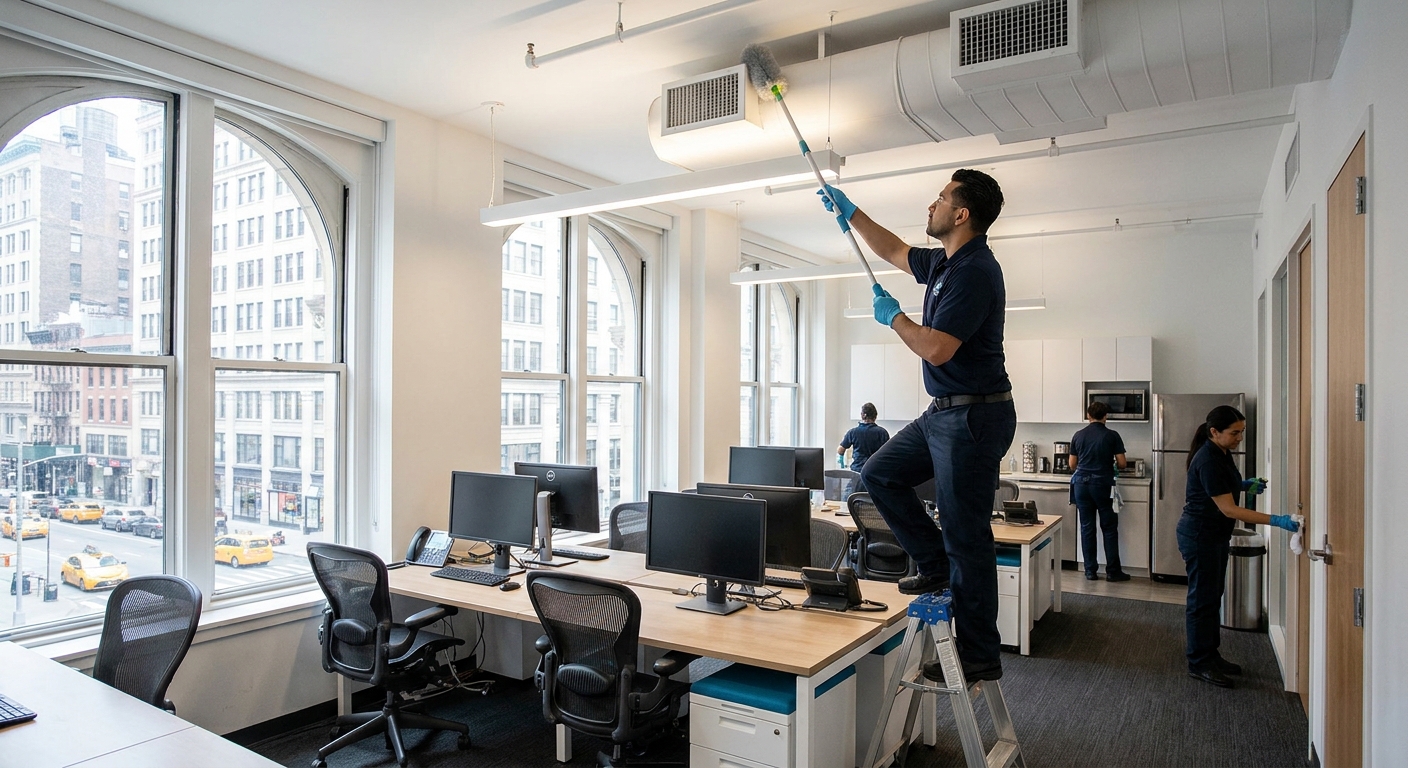
So here's what matters. If you're paying for office cleaning, you should be getting actual results — not just surface-level effort. Every vent should breathe clean. Every corner should be accounted for. And every space your team touches daily should meet a standard that protects health, not just appearance.
The Spots That Get Skipped Every Time
Even with a regular cleaning crew, certain zones slip through the cracks. It's not always negligence — sometimes it's access, sometimes it's oversight, sometimes it's just that nobody wrote it down. But whether it's intentional or not, these areas pile up fast. Dust settles. Grime hardens. Bacteria multiply. And by the time someone notices, the fix takes twice the effort.
We've seen it across hundreds of NYC commercial cleaning projects. The same blind spots show up again and again. Some are tucked away. Others are in plain sight. All of them matter more than most teams realize.
- Underneath desks and behind file cabinets: Furniture doesn't move often, and the floor beneath it doesn't get touched. Crumbs, dust bunnies, and forgotten pens collect there until someone finally shifts the setup.
- Ceiling fans and overhead light fixtures: High up means out of mind. But dust clings to blades and bulbs, dimming your lighting and circulating particles every time the fan spins.
- HVAC vents and air return grilles: Your air system pulls in everything — dust, allergens, mold spores. If the vents aren't cleaned, that debris gets recirculated straight into the workspace.
- Shared keyboards, mice, and phone handsets: These get handled constantly but wiped down rarely. They're germ magnets, especially in hot-desking environments.
- Behind break room appliances: The fridge, microwave, and coffee station all sit in place for months. Spills, crumbs, and sticky residue build up in the gaps, attracting pests and creating odors.
Where Grime Hides in Plain View
Not every neglected area is tucked away. Some of the worst offenders are right there in the open — they just blend into the background until someone takes a closer look. Window tracks collect grit from the city air. Baseboards gather scuff marks and dust lines. Bathroom grout darkens with mildew. These aren't dramatic problems, but they add up to an environment that feels worn down instead of well-maintained.
And here's the thing: your clients notice. Your team notices. It's not about perfection — it's about whether the space feels cared for or left to slide. When details get ignored, people assume the same attitude applies to everything else.
- Window blinds and tracks: City soot settles fast. Blinds trap it between slats, and tracks turn into grime channels that standard dusting can't touch.
- Corners and baseboards: Vacuum edges rarely reach tight angles. Dust builds, paint chips flake, and the whole perimeter starts looking dingy.
- Restroom tile grout and fixtures: Daily wipe-downs handle the surface, but grout lines and faucet bases need scrubbing. Skip it long enough and stains become permanent.
- Door handles and light switches: Constant contact means constant contamination. These high-touch points should be disinfected daily, not just when they look dirty.
- Elevator buttons and lobby touchpoints: Shared spaces see the most traffic and the least attention. If your building handles these, great. If not, they're your problem too.
Why Deep Cleaning Isn't Optional
Regular maintenance keeps things functional. Deep cleaning keeps them healthy. There's a difference between wiping down a desk and actually disinfecting it. Between vacuuming a floor and pulling out furniture to get what's underneath. Between running a mop and scrubbing grout with a brush.
Deep cleaning targets what accumulates over time — the buildup that standard routines can't handle. It's not about looking better for a day. It's about preventing the kind of deterioration that leads to expensive fixes, health complaints, and a workspace that feels stale no matter how much you redecorate.
How We Keep Every Zone Covered
A proper deep clean doesn't happen by accident. It requires intention, accountability, and a system that doesn't rely on memory. We use detailed cleaning checklists that map every corner of your workspace. High zones. Low zones. Hidden zones. Nothing gets skipped because someone forgot or ran out of time.
Our teams are trained to move furniture, access vents, dismantle fixtures when needed, and scrub what others gloss over. We document what we clean, how often, and what needs follow-up. And if something's been neglected for months, we handle it without pointing fingers — we just fix it.
- Monthly deep cleaning rotations: Different zones get intensive attention each cycle, ensuring every area is hit at least quarterly.
- Specialized tools for hard-to-reach spots: Extension poles, microfiber attachments, and steam cleaners for surfaces that need more than a spray bottle.
- Disinfection protocols for high-touch surfaces: Daily attention to door handles, switches, shared devices, and restroom fixtures.
- HVAC and air quality services: Vent cleaning, filter replacement, and air purification systems to keep circulation fresh.
- Post-clean reporting: You get a breakdown of what was done, what was found, and what needs escalation.
The Real Cost of Cutting Corners
Skipping deep cleaning doesn't save money — it just delays the bill. Carpets wear out faster when grit stays embedded. HVAC systems break down when vents stay clogged. Employees call in sick more often when surfaces aren't properly disinfected. And when a prospect walks through your space and sees dust on the blinds or grime in the corners, they're forming opinions about how you run everything else.
We've worked with businesses that thought they were maintaining their space just fine — until they saw what a real deep clean uncovered. The difference isn't subtle. It's the kind of shift that makes people ask if you renovated.
Setting a Standard That Holds
Deep cleaning your NYC workspace isn't a one-time event. It's a rhythm. A commitment. A standard that either exists or doesn't. If you're only addressing what's visible, you're missing the point. The goal isn't to look clean when someone's watching — it's to be clean whether anyone's looking or not.
Many businesses rely on commercial cleaning services to maintain this standard consistently. Choosing the right cleaning schedule makes all the difference in keeping your workspace truly clean.
At BusinessCapital.com, we help business owners build operations that work — including the ones nobody sees. Whether you need funding to upgrade your facility, hire better services, or expand into a space that actually reflects your standards, we'll help you move fast and fund smart. Call 877-400-0297 or apply online for a same-day decision.
Ready to Raise Your Cleaning Standards?
Let's make sure your workspace reflects the care and professionalism your business stands for. If you're ready to see the difference a thorough deep clean can make, give us a call at 347 483-3992 or Get A Quote today and let’s create a healthier, more impressive environment together.
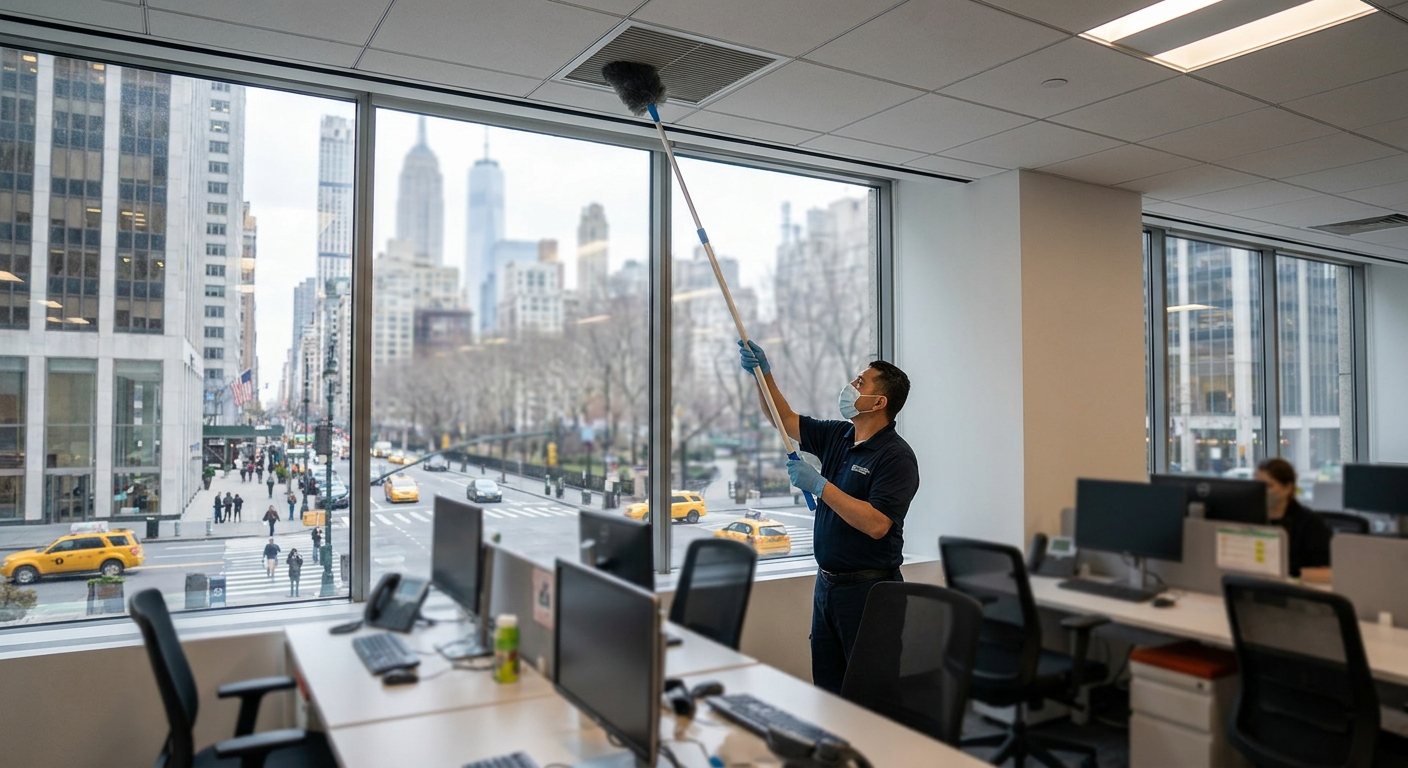
Most business owners think cleaning is about what's visible. Floors swept, desks wiped, trash emptied. But the dirt you don't see is the dirt that costs you. Missed spots don't just look bad when someone finally notices — they degrade air quality, spread illness, and send a message that details don't matter here. In a city where competition is relentless and first impressions stick, that's a problem you can't afford.
So here's what matters. If you're paying for office cleaning, you should be getting actual results — not just surface-level effort. Every vent should breathe clean. Every corner should be accounted for. And every space your team touches daily should meet a standard that protects health, not just appearance.
The Spots That Get Skipped Every Time
Even with a regular cleaning crew, certain zones slip through the cracks. It's not always negligence — sometimes it's access, sometimes it's oversight, sometimes it's just that nobody wrote it down. But whether it's intentional or not, these areas pile up fast. Dust settles. Grime hardens. Bacteria multiply. And by the time someone notices, the fix takes twice the effort.
We've seen it across hundreds of NYC commercial cleaning projects. The same blind spots show up again and again. Some are tucked away. Others are in plain sight. All of them matter more than most teams realize.
- Underneath desks and behind file cabinets: Furniture doesn't move often, and the floor beneath it doesn't get touched. Crumbs, dust bunnies, and forgotten pens collect there until someone finally shifts the setup.
- Ceiling fans and overhead light fixtures: High up means out of mind. But dust clings to blades and bulbs, dimming your lighting and circulating particles every time the fan spins.
- HVAC vents and air return grilles: Your air system pulls in everything — dust, allergens, mold spores. If the vents aren't cleaned, that debris gets recirculated straight into the workspace.
- Shared keyboards, mice, and phone handsets: These get handled constantly but wiped down rarely. They're germ magnets, especially in hot-desking environments.
- Behind break room appliances: The fridge, microwave, and coffee station all sit in place for months. Spills, crumbs, and sticky residue build up in the gaps, attracting pests and creating odors.
Where Grime Hides in Plain View
Not every neglected area is tucked away. Some of the worst offenders are right there in the open — they just blend into the background until someone takes a closer look. Window tracks collect grit from the city air. Baseboards gather scuff marks and dust lines. Bathroom grout darkens with mildew. These aren't dramatic problems, but they add up to an environment that feels worn down instead of well-maintained.
And here's the thing: your clients notice. Your team notices. It's not about perfection — it's about whether the space feels cared for or left to slide. When details get ignored, people assume the same attitude applies to everything else.
- Window blinds and tracks: City soot settles fast. Blinds trap it between slats, and tracks turn into grime channels that standard dusting can't touch.
- Corners and baseboards: Vacuum edges rarely reach tight angles. Dust builds, paint chips flake, and the whole perimeter starts looking dingy.
- Restroom tile grout and fixtures: Daily wipe-downs handle the surface, but grout lines and faucet bases need scrubbing. Skip it long enough and stains become permanent.
- Door handles and light switches: Constant contact means constant contamination. These high-touch points should be disinfected daily, not just when they look dirty.
- Elevator buttons and lobby touchpoints: Shared spaces see the most traffic and the least attention. If your building handles these, great. If not, they're your problem too.
Why Deep Cleaning Isn't Optional
Regular maintenance keeps things functional. Deep cleaning keeps them healthy. There's a difference between wiping down a desk and actually disinfecting it. Between vacuuming a floor and pulling out furniture to get what's underneath. Between running a mop and scrubbing grout with a brush.
Deep cleaning targets what accumulates over time — the buildup that standard routines can't handle. It's not about looking better for a day. It's about preventing the kind of deterioration that leads to expensive fixes, health complaints, and a workspace that feels stale no matter how much you redecorate.
How We Keep Every Zone Covered
A proper deep clean doesn't happen by accident. It requires intention, accountability, and a system that doesn't rely on memory. We use detailed cleaning checklists that map every corner of your workspace. High zones. Low zones. Hidden zones. Nothing gets skipped because someone forgot or ran out of time.
Our teams are trained to move furniture, access vents, dismantle fixtures when needed, and scrub what others gloss over. We document what we clean, how often, and what needs follow-up. And if something's been neglected for months, we handle it without pointing fingers — we just fix it.
- Monthly deep cleaning rotations: Different zones get intensive attention each cycle, ensuring every area is hit at least quarterly.
- Specialized tools for hard-to-reach spots: Extension poles, microfiber attachments, and steam cleaners for surfaces that need more than a spray bottle.
- Disinfection protocols for high-touch surfaces: Daily attention to door handles, switches, shared devices, and restroom fixtures.
- HVAC and air quality services: Vent cleaning, filter replacement, and air purification systems to keep circulation fresh.
- Post-clean reporting: You get a breakdown of what was done, what was found, and what needs escalation.
The Real Cost of Cutting Corners
Skipping deep cleaning doesn't save money — it just delays the bill. Carpets wear out faster when grit stays embedded. HVAC systems break down when vents stay clogged. Employees call in sick more often when surfaces aren't properly disinfected. And when a prospect walks through your space and sees dust on the blinds or grime in the corners, they're forming opinions about how you run everything else.
We've worked with businesses that thought they were maintaining their space just fine — until they saw what a real deep clean uncovered. The difference isn't subtle. It's the kind of shift that makes people ask if you renovated.
Setting a Standard That Holds
Deep cleaning your NYC workspace isn't a one-time event. It's a rhythm. A commitment. A standard that either exists or doesn't. If you're only addressing what's visible, you're missing the point. The goal isn't to look clean when someone's watching — it's to be clean whether anyone's looking or not.
Many businesses rely on commercial cleaning services to maintain this standard consistently. Choosing the right cleaning schedule makes all the difference in keeping your workspace truly clean. That’s why we focus on cleaning solutions that keep your store spotless and your shoppers undisturbed. If you’re ready to see how seamless retail cleaning can be, give us a call at 347-483-3992 or get a quote today. Let’s create a cleaner, more inviting space together.
‹ Back
Recent Posts
-
Does Your Manhattan Office Need More Frequent Cleaning?
October 9, 2026
-
When Should You Clean Your New NYC Office After Moving?
September 25, 2026
-

Can Office Cleaning in Manhattan Help Create a Healthier Workplace?
September 11, 2026
-
-
Is Your NYC Facility Clean Enough for Client First Impressions?
August 14, 2026