By using our website, you agree to the use of cookies as described in our Cookie Policy
Is Your Medical Facility Cleaning in NYC Meeting Your Standards?
Most healthcare administrators think cleaning is just about appearances. Floors mopped, surfaces wiped, trash emptied. But the Department of Health sees more than that — and if you don't, you're inviting risk. Cleaning may look thorough on the surface, but it leaves a trail in your compliance records. Especially if you're dealing with HAIs or facing an inspection.
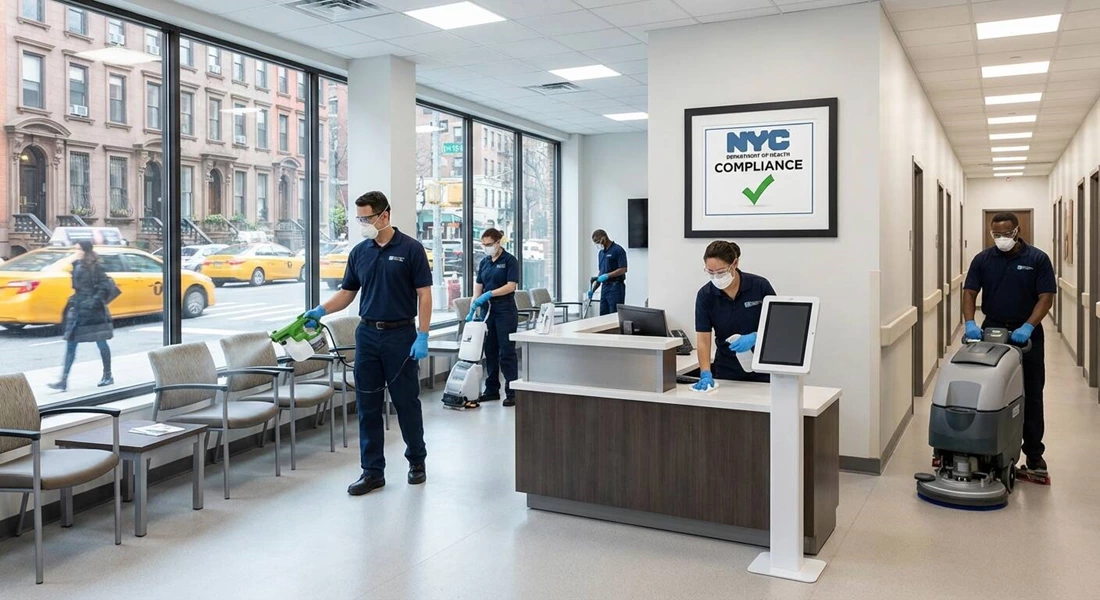
So here's the reality. If you're running a medical facility in one of the densest cities on earth, that's serious business. Just don't treat sanitation like a checkbox. Every surface should have a protocol. Every disinfectant needs documentation. And every cleaning decision should be grounded in what pathogens you're fighting — not just what looks clean to the naked eye.
When Clean Isn't Actually Sterile
Nine times out of ten, facilities think they're compliant because the floors shine. You hire a crew, they show up nightly — that's maintenance, not infection control. The city doesn't care how often you vacuum, only whether high-touch zones are disinfected and whether your methods meet CDC standards.
But if an outbreak hits? Different conversation. Healthcare-associated infections can trace back to inadequate protocols, especially if the cleaning didn't follow the guidelines laid out by OSHA or the state. We saw this unfold during COVID. Plenty of clinics thought surface wiping was enough — it wasn't. And when infections get flagged, inspectors expect to see documented procedures unless you can prove an exception like emergency staffing shortages.
The Disinfectants That Actually Count
You can't rely on generic cleaners for patient areas — that's just removing visible dirt. But hospital-grade disinfectants? Those Those are what kill pathogens. Regulators generally require EPA-registered products proven effective against the organisms you're likely to encounter.
Here's where that distinction matters most:
- Exam rooms need agents effective against MRSA and C. diff, not just everyday bacteria
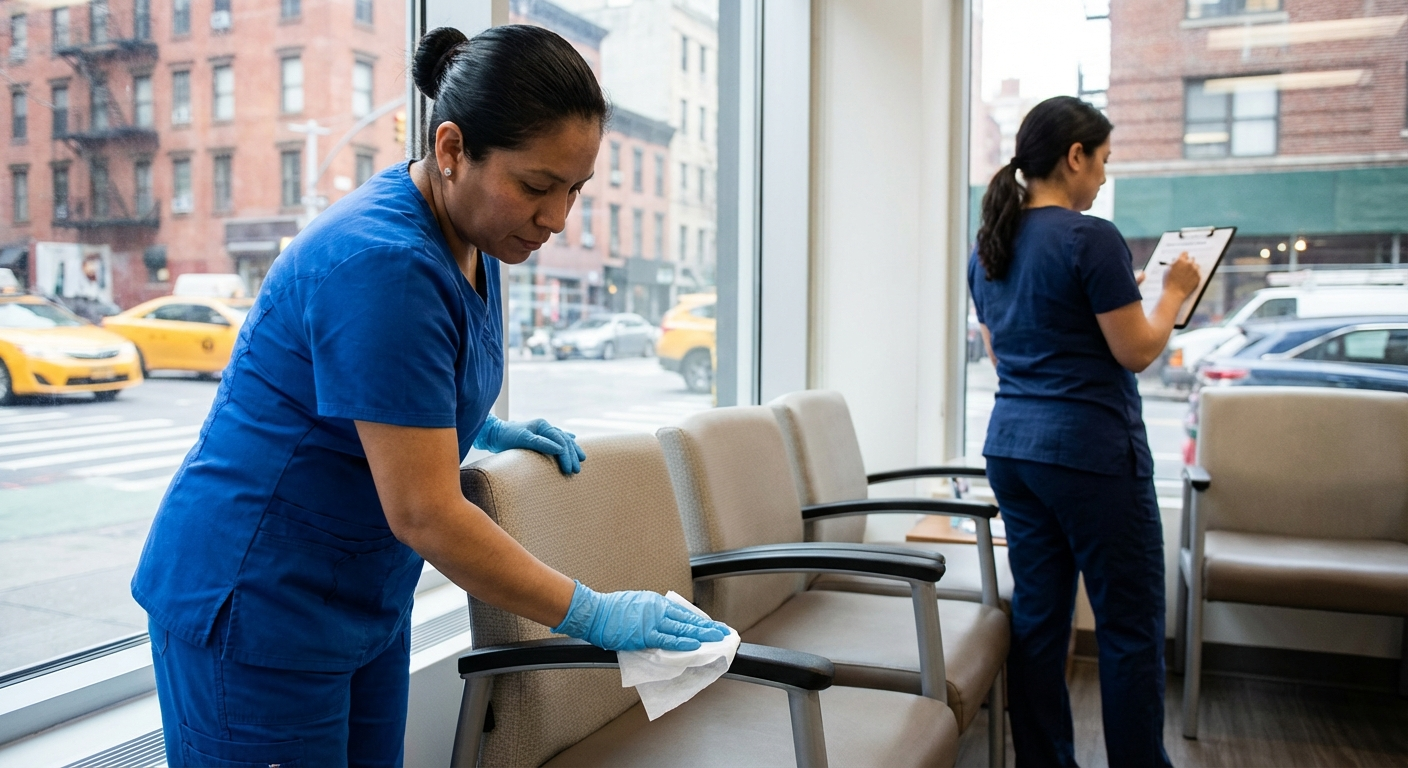
- Waiting areas require frequent disinfection of armrests, door handles, and check-in counters
- Surgical suites demand sterile-grade protocols with documented contact times for every surface
- Isolation wards call for specialized PPE and disposal methods that standard crews may not be trained for
- Restrooms aren't just about odor control — they're breeding grounds for fecal-oral transmission if protocols slip
When Compliance Falls Apart
Want to pass an inspection? You'll need to prove your cleaning was real — and that your staff knew what they were doing.
The DOH has three main checkpoints:
- You followed a documented cleaning schedule with assigned responsibilities
- You used approved disinfectants with proper dwell times
- You maintained records showing when, where, and how cleaning occurred — not just a signature sheet
Fail one of those those, and the violation sticks. Even if your facility looks spotless during the walkthrough. And if any area was skipped due to staffing issues? That's a gap too. No partial credit for cleaning three floors when you're licensed for four.
High-Touch Zones Get Missed More Than You Think
If your facility sees heavy patient volume, there's a threshold where standard nightly cleaning isn't enough. NYC medical facilities serving vulnerable populations or handling infectious cases need multiple daily disinfection cycles.
You'll need to map out your high-risk zones and schedule accordingly. Most small practices won't need round-the-clock sanitation — but urgent cares, dialysis centers, and surgical practices absolutely do. Especially if they're managing immunocompromised patients or sitting on multiple treatment rooms.
Your Infection Control Is Only As Strong As Your Records
Want to defend your protocols? Show your work. You'll need more than a few invoices from your cleaning company to back up compliance.
Here's what your documentation should include:
- The cleaning contract with scope of work clearly defined
- Product safety data sheets for every disinfectant used
- Training records showing staff certification in infection control
- Daily logs tracking which areas were cleaned and by whom
If the DOH shows up unannounced, they won't just take your word for it. Mixing medical-grade and commercial-grade products is one of the fastest ways to fail an audit. So if that disinfectant you're using claims to kill everything but doesn't list EPA registration, you'd better have a backup plan.
Where Most Facilities Slip Up
Calling Every Wipe-Down a Disinfection: Spraying cleaner and immediately wiping it off? That's not disinfecting. The product needs contact time — usually several minutes — to actually kill pathogens. Rushing through high-touch surfaces defeats the purpose and creates a false sense of security.
Forgetting to Rotate Products: Don't use the same disinfectant for every surface year-round. Pathogens can develop resistance, and different areas require different formulations. If you're not rotating or updating your product list, you're leaving gaps. Review your inventory quarterly. It's tedious. It works.
Ignoring Staff Turnover: If your cleaning crew changes and nobody retrains the new hires, your protocols are only as good as institutional memory. That's a recipe for inconsistency. Reference OSHA's Bloodborne Pathogens Standard and don't assume. That's what compliance officers are for.
Bringing In the Right Team
If your facility handles multiple specialties, high patient turnover, or anything involving biohazards, you're in territory where specialized medical cleaning services fall short.
A medical-grade cleaning partner helps you:
- Identify which surfaces need daily versus hourly disinfection
- Apply the correct products for each zone without cross-contamination
- Separate clinical waste from general trash cleanly and legally
- Handle surprise inspections with confidence
- Keep your facility running without infection scares
It's not just about avoiding fines this quarter. It's about building reliable systems that keep patients safe and your reputation intact for the long haul. Routine cleaning for medical offices ensures consistent compliance and reduces the risk of healthcare-associated infections over time.
Standards That Don't Bend
Meeting regulatory requirements isn't the hard part. Maintaining them day after day — and proving you did when someone asks — that's where facilities get caught off guard. There's no excuse for cutting corners when the protocols are there for the taking. But there's also no forgiveness when you skip the details that matter most. Understanding how commercial cleaning reduces sick days can help administrators see the broader impact of proper sanitation protocols. For facilities looking to implement comprehensive protocols, reviewing a detailed cleaning checklist ensures nothing gets overlooked. If you're ready to elevate your facility's standards with commercial cleaning services, now is the time to act.
Let’s Raise the Bar for Your Facility
We know that keeping your medical facility truly clean is about more than just appearances—it's about protecting your patients, your staff, and your reputation every single day. If you’re ready to take infection control and compliance seriously, let’s work together to make sure nothing slips through the cracks. Call us at (347) 483-3992 or get a quote and let’s set a new standard for your NYC medical facility.
‹ Back
Recent Posts
-
When Should You Clean Your New NYC Office After Moving?
September 25, 2026
-

Can Office Cleaning in Manhattan Help Create a Healthier Workplace?
September 11, 2026
-
-
Is Your NYC Facility Clean Enough for Client First Impressions?
August 14, 2026
-